




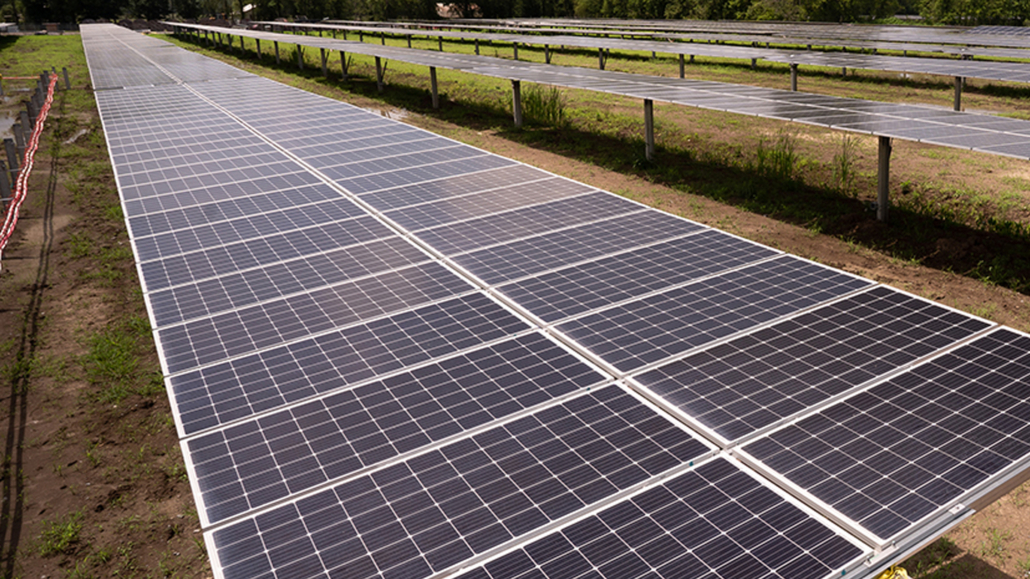
Volkswagen Group Africa has completed the second phase of its major solar photovoltaic (PV) carport project at the Kariega manufacturing plant, pushing the facility’s total installed solar capacity to 5.2 MWp.
The expansion lifts the plant’s renewable energy production to more than 7,000 MWh per year, strengthening the automaker’s long-term decarbonisation strategy in South Africa.
The solar rollout forms part of Volkswagen’s multi-year sustainability programme, which aims to transition a significant portion of the Kariega plant’s power consumption to clean energy.
Phase 2 Completion and Project Investment
The second phase of the solar carport project required an investment of R35 million, bringing the total project value to R90 million.
This phase added a further 2.1 MWp to the system through the installation of 3,582 solar panels, each rated at 585W. The new phase alone is expected to generate roughly 2,699 MWh of clean electricity annually.
The first phase, completed in 2024, introduced 3.1 MWp of capacity through 5,712 panels. Combined, Volkswagen has now installed over 9,200 solar panels across employee parking areas and the service centre zone at the Kariega facility.
Total Output: 5.2 MWp Solar Capacity
With both phases fully operational:
- Total installed capacity: 5.2 MWp
- Annual expected output: 7,125 MWh
- Total panels installed: More than 9,200
This output significantly reduces the plant’s reliance on grid electricity, supports sustainable operations, and contributes to Volkswagen’s global emissions-reduction targets.
Volkswagen: “A Major Milestone in Sustainable Manufacturing”
“The completion of the second phase of our solar project marks another major milestone in our journey towards fully sustainable manufacturing,” said Ulrich Schwabe, Production Director at Volkswagen Group Africa.
Read Also: Winners & Losers: Who Benefits from South Africa’s New Transmission Infrastructure Regulations?
He added that the expansion reinforces the company’s commitment to reducing carbon emissions and integrating cleaner energy sources into its operations.
South Africa’s automotive industry is under increasing pressure to adopt cleaner, more efficient manufacturing practices especially from European markets transitioning to low-carbon supply chains. Volkswagen’s investment signals:
- Growing private-sector participation in renewable energy
- Reduced dependence on Eskom, helping improve energy security
- A model for decentralised, on-site power generation
- A long-term shift toward net-zero manufacturing pathways
With OEMs facing rising global sustainability requirements, VW’s move places South Africa’s auto sector on a more competitive and environmentally aligned trajectory.
By Thuita Gatero, Managing Editor, Africa Digest News. He specializes in conversations around data centers, AI, cloud infrastructure, and energy.


