

The African Development Bank Group (AfDB) has approved $68.26 million in new financing to help Mali strengthen and secure electricity supply for its capital city, Bamako, a fast-growing urban centre facing chronic outages and rising demand. The approval was granted on 12 November 2025 in Abidjan.
The funding supports the Bamako 225 kV North Loop Project, a major transmission initiative designed to modernise the backbone of the city’s grid, increase reliability, and reduce dependence on expensive thermal generation. Once completed, the project is expected to significantly enhance electricity access for households and businesses across the metropolitan area.
Bamako’s metropolitan population is estimated at over 4.5 million people. With the project set to connect 10,000 new households and productive users, the upgraded transmission loop is expected to directly support more than 60,000 people, while indirectly stabilising power supply for the entire capital city.
With a boosted transmission capacity of 600 MW, the network upgrade will support Bamako’s fast-rising demand, which has grown by an average of 10% annually.
Financing Structure
The AfDB’s commitment comes from multiple windows:
- $35.27 million loan from the African Development Fund
- $18.99 million from the Transition Support Facility
- $5 million loan + $6.8 million grant from the Climate Investment Fund
- $2.2 million grant from the Green Climate Fund
In total, the AfDB is covering 36.13% of the project’s cost, which is estimated at $190 million.
Co-financiers include:
- West African Development Bank – 27.36%
- Islamic Development Bank – 32.91%
- Government of Mali – 3.6%
This combined financing marks one of Mali’s largest grid modernisation efforts in recent years.
Mali’s electricity sector is under heavy strain:
- National access rate (2023): 55.8%
- Urban: 86.6%
- Rural: 30.4%
- Total installed capacity: 903.6 MW
- Thermal power share: >54%
- Grid losses: 22% (10% technical losses)
- High reliance on fuel imports
- Persistent subsidy burden
With Bamako accounting for the bulk of national energy demand, stabilising the capital’s supply is essential both for economic resilience and social wellbeing.
“This project will help safeguard Bamako’s electricity supply and guarantee access to reliable, sustainable and modern energy services at an affordable cost,” said Lamin Barrow, AfDB Director General for West Africa. He added that the infrastructure will also “boost agricultural value chains and employment for young people and women.”
Read Also: Top 10 Hydrogen Stocks for Long-Term Growth
The initiative focuses on reinforcing the transmission network and opening up new distribution corridors. Key components include:
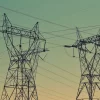
- Construction of a 225 kV double-circuit line between the Kodialani and Dialakorobougou substations
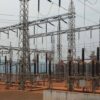
- Development of two new 225/33 kV substations in Safo and Kénié
- Expansion of three existing substations (Kodialani, Kambila, and Dialakorobougou)
- Laying new medium- and low-voltage lines to serve emerging communities
- Installation of 2,000 smart meters for high-voltage customers
- Connection of 10,000 new households and businesses
- Increase of transmission capacity to 600 MW
The project is expected to generate:
- 320 temporary jobs, with at least 20% reserved for women
- 60 permanent positions within Mali’s energy sector
- 60 internships for young graduates (50% women)
Communities along the route will benefit from public consultations, land-management support, and local capacity-building activities.
By reducing the city’s dependence on thermal generation, the project is projected to cut emissions by 1.12 million tonnes of CO₂ equivalent per year, representing more than half of what Bamako’s current energy system would emit without the upgrade.
Running from January 2026 to December 2030, the project will ultimately reinforce the power supply for all residents of Bamako, supporting households, industries, healthcare facilities, agriculture, and the city’s growing service sector.
As Mali experiences rising electricity demand, ageing infrastructure, and financial challenges in the energy sector, the Bamako North Loop Project represents a critical step toward a more reliable and sustainable power system.


