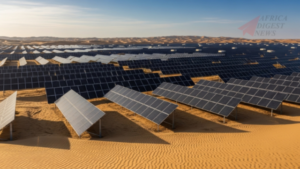
The Algeria Renewable Energy Program (AREP) is built on the African Development Bank’s practical experience with Independent Power Producer (IPP) procurement in Ethiopia, Nigeria, and Angola.
These regional lessons have moved Algeria from broad goals to a specific, technical execution plan.The technical lessons learned from the Bank’s work in Ethiopia and Nigeria focus on reducing investor risk through pre-procurement preparation.
Algeria is no longer relying solely on its high solar potential, noted at an average irradiation of 2,000 kWh/m2.
Read Also: How much solar capacity will be installed globally in 2026?
Instead, it has adopted a three-step technical approach:
• Rigorous Site Identification: Before a project is tendered, the state now conducts technical, financial, and environmental studies for each location. This prevents the delays that occur when developers find a site is unfeasible after winning a bid.
• Structural Grid Planning: A core lesson involves Interconnection Agreements. By integrating these into the initial framework, Algeria ensures the grid can handle the 1,480 MW of capacity expected to come online by summer 2026.
• Legal Template Standardisation: Algeria has developed ready-to-use documents for Power Purchase Agreements (PPAs), Concession Agreements, and Direct Agreements. These templates are based on what worked in other African IPP markets to remove friction during the contracting phase.
The objective is to move from a state-dominated sector to a competitive market. The AREP provides technical assistance to complete the legal and institutional framework that allows private investors to operate with certainty. This includes training on negotiation and regulatory issues to ensure the state can manage high-value contracts effectively.
The weight of this strategy will be felt soon. With the 200 MW facilities at El Ghrous and Tendla scheduled for operation in late January 2026, Algeria is putting these regional lessons to a physical test.
If these projects meet their deadlines, it will confirm that the country has successfully used the Ethiopia and Nigeria models to build a functional, private-sector-led energy transition.
By Thuita Gatero, Managing Editor, Africa Digest News. He specializes in conversations around data centers, AI, cloud infrastructure, and energy.