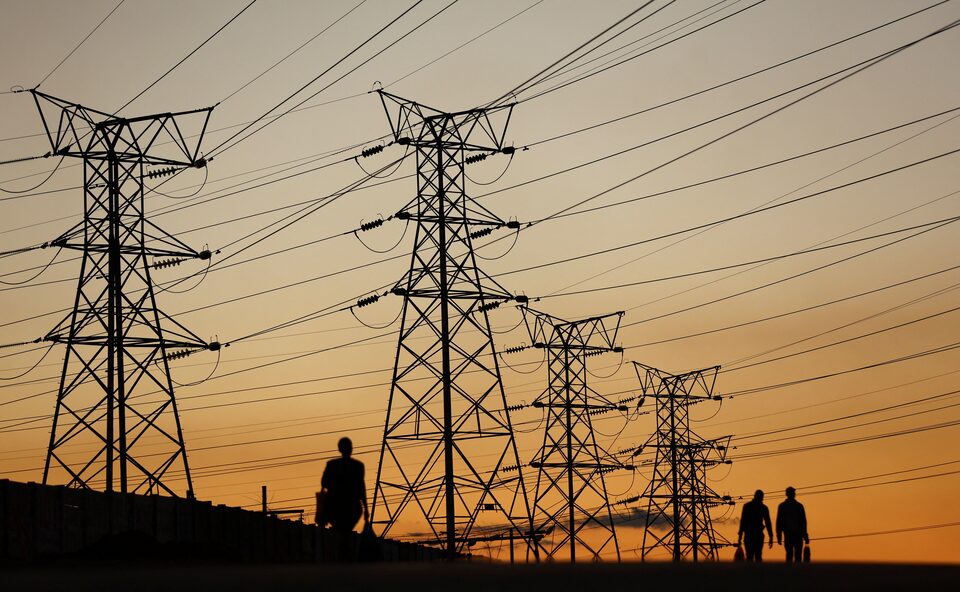




South Africa can enable an additional 53 GW of electricity generation by rolling out about 14,000 km of new transmission lines over the next decade, a build-out that underpins the country’s shift to cleaner, cheaper power and long-term energy security. Government planning documents and Eskom’s Transmission Development Plan (TDP) converge on these targets, which are now being advanced through a new Independent Transmission Projects (ITP) programme to bring in private capital alongside the National Transmission Company South Africa (NTCSA).
Why the Grid, Not Generation, Is the Bottleneck
South Africa’s best wind and solar resources are concentrated in the Northern, Western, and Eastern Cape. However, available grid capacity in these provinces has effectively been exhausted, stranding ready-to-build renewable projects. Developers are increasingly forced to locate in less optimal zones with weaker grid infrastructure, driving up costs and delaying the delivery of clean power. This reality has made transmission, not generation, the main constraint to South Africa’s energy transition.
Industry surveys and grid assessments reveal a rapidly growing pipeline of renewable projects competing for scarce connection capacity. Without a significant grid expansion, much of the planned clean energy will remain on paper instead of supplying homes and businesses.
The Headline Build: Lines, Transformers, and Pace
The TDP sets out a decade-scale expansion programme that, in addition to the 14,000 km of new lines, requires a massive increase in transformer capacity, around 100,000 MVA. To achieve this, the country would need to maintain a sustained construction tempo of about 1,400 km per year.
NTCSA has already started dozens of projects that will add more than 1,400 km of transmission lines and nearly 17,000 MVA of transformer capacity in the near term. However, experts warn that the pace must accelerate significantly if South Africa is to meet its ambitious 53 GW goal.
How the New ITP Model Works
To address the challenge, South Africa has launched the Independent Transmission Projects programme, opening transmission development to private sector participation for the first time. Under this model, the Department of Electricity & Energy acts as the procurer, while NTCSA signs Transmission Services Agreements (TSAs) with private consortia.
These consortia will finance, construct, and operate grid segments before transferring them under regulated arrangements. The first ITP package targets about 1,164 km of 400 kV lines in high-priority corridors across the Northern Cape, North West, and Gauteng, with further phases expected.
Financing a R400bn-Plus Build
Building 14,000 km of transmission and associated substations will cost hundreds of billions of rand, with estimates hovering around R440 billion (roughly $21–$25 billion). To avoid overburdening public finances, the government is working with development finance institutions to create a credit-guarantee facility that will de-risk private investment.
The National Treasury has committed seed “first-loss” capital to this facility, while international partners, including multilateral lenders, are expected to provide additional support. The goal is to ensure projects can secure financing at competitive rates and move from planning to construction without lengthy delays.
IRP, TDP, and Grid-Access Reform
The Integrated Resource Plan (IRP) and the Transmission Development Plan (TDP) form the backbone of the 14,000 km/53 GW target. They align the country’s transmission expansion with its generation roadmap, which prioritises wind, solar, storage, and flexible generation capacity.
Reforms are also under way to streamline grid-access rules, speed up land servitude acquisition, and establish fair curtailment frameworks. These measures aim to optimise the use of existing infrastructure while new lines are built. In addition, global best practices such as dynamic line rating and advanced power-flow control are being considered to maximise capacity.
Also read: Morocco Launches $6.18 Million Hybrid Solar-Diesel Power Project in El Guerguarat
What 53 GW Unlocks
- Reliability: New transmission corridors will allow renewable-rich provinces to feed power into the grid more effectively, reducing the risk of outages and lowering dependence on expensive peaking power plants.
- Affordability: Accessing high-quality wind and solar resources in optimal locations will lower the overall cost of electricity generation, which can translate into lower tariffs for consumers.
- Decarbonisation: More transmission capacity will enable the large-scale replacement of coal power with renewable energy, supporting South Africa’s climate commitments without sacrificing supply stability.
- Investment and Jobs: The construction of new lines, substations, and transformers will create jobs, stimulate local manufacturing, and strengthen the engineering and construction sectors.
Even with the ITP in motion, several challenges could slow progress:
- Servitudes and Land Access – Negotiations for wayleaves, environmental approvals, and community engagement can delay projects. Streamlining these processes and establishing community agreements early will be essential.
- Equipment Lead Times – The global supply of transformers and conductors is tight. Multi-year procurement agreements and incentives for local manufacturing will be crucial.
- Construction Capacity – Building at the required pace demands multiple engineering, procurement, and construction (EPC) consortia operating simultaneously, supported by standardised designs and workforce training.
- Regulatory Certainty – Clear and bankable contracts, congestion management rules, and transparent connection-capacity updates are necessary to sustain investor confidence.
- Funding Scale-Up – Mobilising institutional investors and finalising the credit-guarantee mechanism will determine how quickly the expansion moves beyond the first set of projects.
Also Read: Last-Mile Connectivity Lights Up Rural Kenya as REREC Expands the Grid
The initial priority is to expand Cape export corridors to move surplus renewable power northwards and to reinforce grid infrastructure around Gauteng, the country’s largest load centre. These projects will deliver the biggest short-term gains by relieving congestion, connecting ready-to-build renewable projects, and enhancing overall grid reliability.