


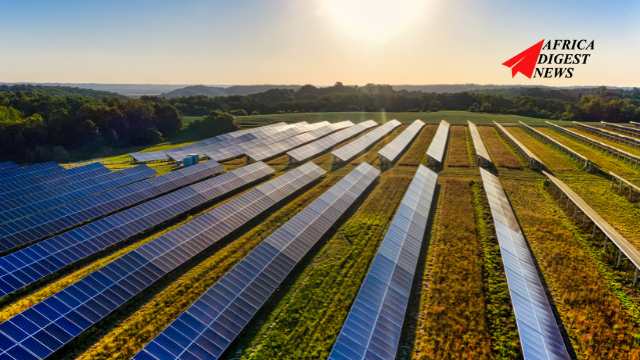
GRIPS Energy Group has secured growth-equity investment from Fortis Green Renewables Investment Management and Zeitinger Invest GmbH to expand its solar and battery-storage business across sub-Saharan Africa. The investment will support the acquisition of operational renewable-energy assets as well as the development of new solar and solar-plus-storage projects. The company is targeting a portfolio exceeding 100 MW by 2030, positioning the investment as part of a broader effort to scale distributed energy infrastructure for African businesses.
The expansion strategy includes potential acquisitions in Senegal, Botswana, Zambia and Uganda. Rather than relying entirely on greenfield development, acquiring operating assets can give GRIPS access to existing customers, revenue streams and infrastructure while allowing it to expand its portfolio more quickly. New projects would complement those acquisitions, although their delivery will depend on financing, customer demand, regulatory approvals and access to suitable sites and grid connections. The investors have not disclosed the value of the equity investment or the capacity of the individual assets being targeted.
Solar and battery storage are increasingly being deployed together to address the limitations of electricity supply for commercial and industrial customers. Solar panels generate electricity during daylight hours, while batteries can store some of that output for use later, helping businesses manage fluctuations in supply and reduce their reliance on grid electricity or diesel generators. The economics depend on factors such as electricity tariffs, consumption patterns, battery costs and how frequently stored power is used. For businesses with substantial daytime consumption or expensive backup power requirements, these systems can offer a way to improve supply reliability while managing energy expenditure.
Read Also: Africa Has 58,000 GW of Wind Potential. It Has Installed Just 11.1 GW
The investment also highlights the role of growth capital in scaling distributed renewable energy companies. Project-level financing can fund individual installations, but equity can provide developers with the flexibility to acquire assets, build internal capacity and pursue opportunities across multiple markets. For GRIPS, combining acquisitions with new project development could create a larger portfolio and broaden its customer base. However, operating across several countries also introduces differences in regulation, currency exposure, payment risk and the availability of financing, all of which influence the performance of a regional portfolio.
GRIPS expects its expanded portfolio to avoid approximately 100,000 tonnes of carbon dioxide emissions annually once the targeted assets are developed, according to the company’s projections. That outcome will depend on the capacity actually commissioned, the electricity displaced by renewable generation and the performance of the storage systems. The 100 MW target remains a development ambition rather than installed capacity already operating across the four acquisition markets. The key measure of progress will be how quickly the investment translates into completed projects, operating assets and dependable electricity for businesses.


