




Nigeria’s small-scale solar market has grown to an estimated US$2.4 billion, making it the largest of its kind in Africa. The expansion has been driven by unreliable grid electricity, rising diesel costs, and businesses and households investing in their own power solutions rather than waiting for the grid to improve. The growth reflects a broader shift in Africa’s energy landscape. Where reliable electricity is unavailable, consumers are increasingly turning to rooftop solar, batteries and hybrid systems to secure dependable power.
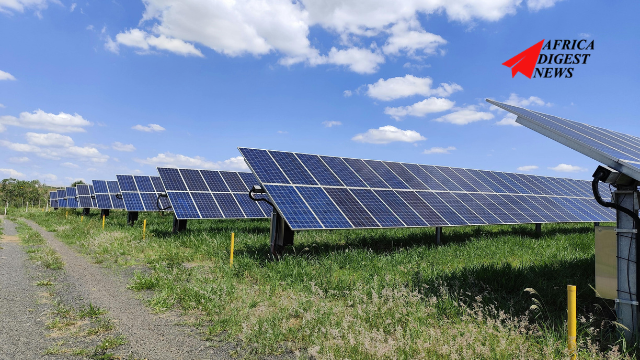
At the same time, Africa attracted US$13.5 billion in renewable energy investment, highlighting continued investor interest in the continent’s clean energy sector. However, the distribution of that investment remains uneven, with capital flowing more easily into markets and projects that offer stronger financing structures and lower perceived risk. The contrast reveals an important reality. Africa’s energy challenge is no longer about demand for renewable energy or the availability of technology. It is about converting investment commitments into projects that can be financed, built and connected to the grid.
Nigeria’s rapid adoption of distributed solar demonstrates how quickly markets can respond when customers need reliable electricity. But it also underlines the limits of self-generation. While rooftop and commercial solar improve resilience for individual users, they cannot replace the need for stronger transmission networks, utility-scale generation and modern electricity infrastructure. For Africa to close its power gap, both models will be needed. Distributed solar can provide immediate relief for homes and businesses, while utility-scale renewable projects strengthen national grids and support long-term industrial growth.
Read Also: Why Eskom Green Could Reshape Renewable Energy Investment in South Africa
The broader lesson is that financing remains the biggest constraint. High borrowing costs, utility credit risk and currency volatility continue to slow renewable energy deployment across many African markets. Reducing these barriers will be essential if the continent is to translate growing investor interest into large-scale, reliable electricity infrastructure. Nigeria’s solar boom is therefore an encouraging development, but it also highlights a wider challenge: Africa is attracting more capital than before, yet it still needs financing that is cheaper, more accessible and better aligned with the scale of its energy ambitions.


