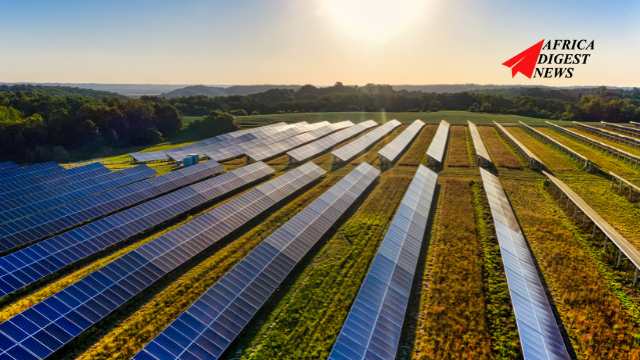



Morocco is getting utility-scale solar tariffs below US$0.03 per kWh, a price that puts its renewable power among the most competitive on the continent and globally. The obvious explanation is strong sunshine and falling solar-panel costs. But that misses the more important part of the story. Morocco has spent years building a market in which large renewable projects can actually be financed, constructed and connected to a long-term buyer. The cheap electricity is therefore not just a resource story. It is a market-design story.
A major part of that design is scale. Morocco has built a pipeline of large renewable projects backed by structured tenders, long-term power purchase agreements and significant state involvement. Its planned investment programme of about US$32.5 billion includes major developments such as the Noor Midelt and Atlantic complexes, together targeting roughly 10 GW. For developers and lenders, that matters because a project with a defined procurement process, an identifiable buyer and a predictable revenue structure is much easier to price than a small project operating in an uncertain market. Cheap solar begins with cheap technology, but it becomes investable when the surrounding system reduces risk.
That is also why Morocco has attracted companies such as ACWA Power, Masdar, TotalEnergies, Enel and ENGIE. They are not simply buying sunshine. They are competing for projects inside a market where renewable generation is being developed at industrial scale. The competition itself can push tariffs lower: developers have an incentive to offer aggressive prices when they believe the project pipeline is credible and the rules are sufficiently clear. Morocco has effectively turned renewable energy procurement into a competition for capital as much as a competition for electricity prices.
Then there is the second market Morocco is trying to build around those cheap electrons: green hydrogen and its derivatives. The strategy is to use abundant renewable power not only to supply Morocco’s electricity system but to produce products that can ultimately be sold into European markets. Plans envision clean-hydrogen production reaching millions of tonnes a year in the 2030s. That changes the investment proposition. Solar and wind are no longer being treated only as power-generation assets; they can become inputs into industrial production, fuels and exports. Morocco is trying to move from selling electricity to using cheap electricity as the foundation for a larger industrial economy.
Read Also: Why Is Africa Installing 100,000 Solar Panels Every Day?
But cheap tariffs do not eliminate the risks. Grid capacity, interconnection delays and currency exposure can still make a project more expensive or slow its delivery. That is the important lesson from Morocco for the rest of Africa. Having good renewable resources is the starting point, not the competitive advantage. The advantage comes when a country can turn those resources into bankable projects, competitive procurement, reliable infrastructure and a market for the resulting energy. Morocco’s solar price is therefore less a story about how cheaply panels can generate electricity and more a story about what happens when an energy market is designed to make large-scale renewable investment possible.