






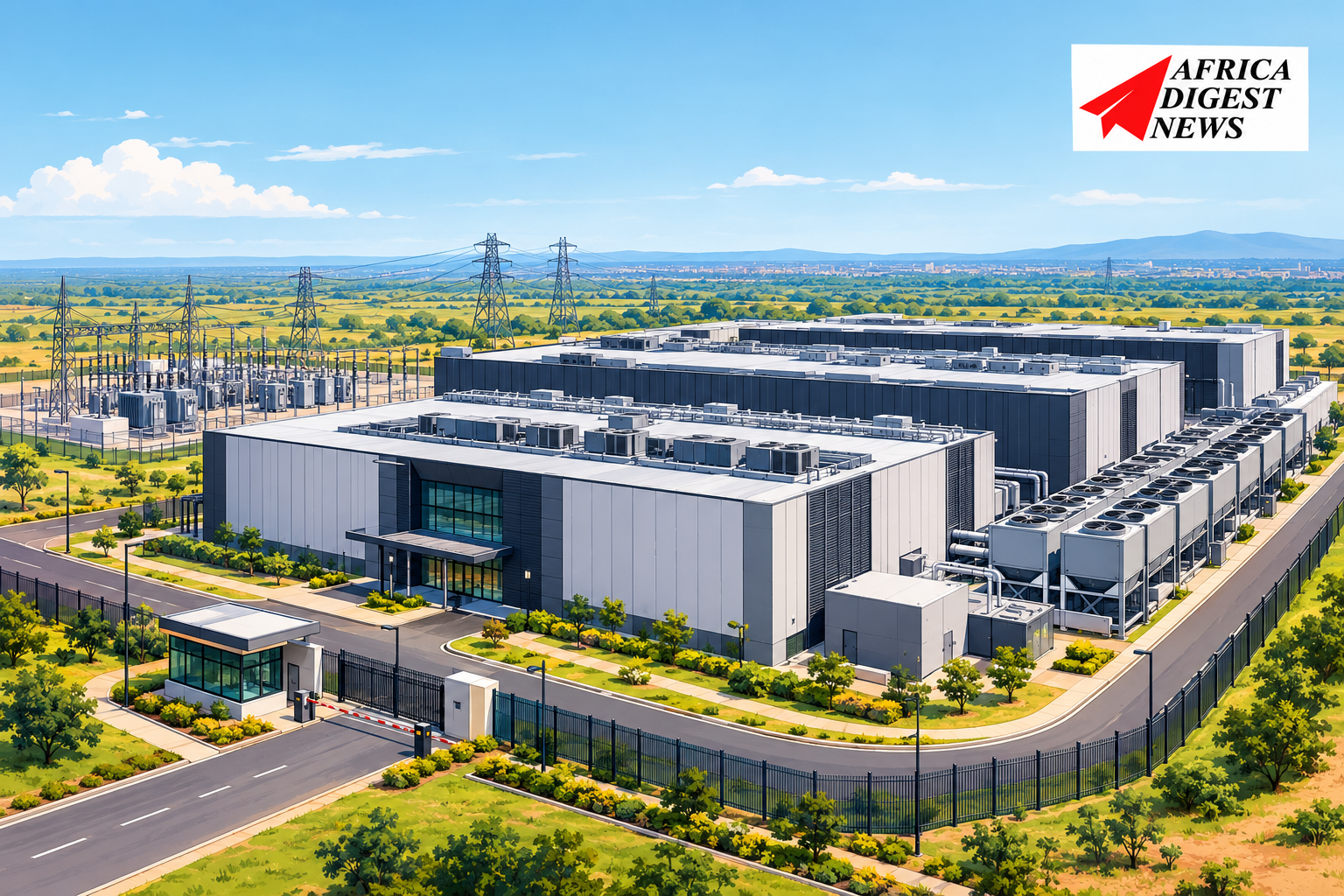
AI data centres are becoming one of Africa’s biggest infrastructure bets. But there is a question that deserves more attention: how many jobs do they actually create? At South Africa’s Coega Special Economic Zone, Vexa Infrastructure says its proposed AI and cloud campus could generate about 34,800 construction job-years over six years and around 500 permanent operational jobs. The campus could eventually require up to 556 MW of electricity.
That 34,800 figure sounds enormous until you understand what a job-year means. It does not mean 34,800 people working at the same time. Spread across six years, it works out to roughly 5,800 construction jobs per year. The more important long-term number is the 500 permanent positions once the facility is operational. Vexa is also projecting up to R25.3 billion in opportunities for Eastern Cape suppliers, suggesting the project is being positioned as more than a giant building full of servers.
Compare that with Hyderabad, India, where HyperVault and TCS are developing a 1 GW AI data-centre campus backed by an investment of about ₹70,000 crore, or roughly US$7.4 billion. The project is expected to generate around 7,000 direct and indirect jobs across construction, engineering, technical and operational activities. On the surface, Hyderabad creates far more jobs in absolute terms. But divide the headline figures by power capacity and the picture changes: Coega comes to roughly 62.6 construction job-years per MW, while Hyderabad comes to about seven jobs per MW. That comparison is useful but imperfect, because the two projects are counting employment differently.
Read Also: Egypt Signs 25-Year Deal for 1 GW Wind Farm at the Gulf of Suez
Hyperscale data centres are fundamentally capital-intensive infrastructure. Once built, they can consume enormous amounts of electricity without employing thousands of people on site. Their wider economic impact therefore depends heavily on what happens around the facility: construction, electrical engineering, cooling systems, fibre networks, security, maintenance, equipment suppliers and, eventually, companies that use the computing capacity. Hyderabad already sits inside a much larger technology and industrial ecosystem. Coega is trying to use the data centre itself as part of building that ecosystem.
That may be the more important test for Africa. The question is whether the electricity, infrastructure and capital flowing into these projects can generate an industrial ecosystem around them. If Africa is going to spend enormous amounts of power on AI infrastructure, the payoff cannot be measured only by the number of servers inside the building.


