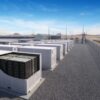


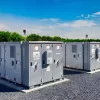



Africa is attracting a small share of its energy-transition investment into battery storage despite a sharp decline in battery prices. Stationary battery pack prices fell 45% to approximately US$70 per kilowatt-hour in 2025, according to BloombergNEF. Yet only US$666 million of the US$13.84 billion invested in Africa’s energy transition during the year went towards energy storage and flexibility, representing less than 5% of the total, according to figures tracked by Electron Intelligence. The contrast highlights a gap between cheaper technology and the capital required to deploy it at scale.
Lower battery prices matter because storage can help address one of the central challenges of renewable electricity: generation does not always coincide with demand. Solar farms produce electricity during daylight hours, while consumption can remain high after sunset. Batteries can store surplus electricity and release it later, helping reduce curtailment, manage peak demand and support grid stability. They can also provide backup power for businesses and facilities facing unreliable electricity supply. However, the value of storage depends on local electricity prices, grid conditions and how the system is operated.
The 45% decline refers to battery packs, not the total cost of installing a functioning storage system. A project also requires power-conversion equipment, control systems, installation, grid connections and, in some cases, additional civil works. Freight, import duties, currency movements and financing costs can further affect the final price in African markets. The cost of capital is particularly important because storage projects require substantial upfront spending, while revenues depend on how effectively the battery is used and whether the market provides payment for the services it supplies. BloombergNEF attributed the global price decline to factors including manufacturing overcapacity, competition and the growing use of lower-cost lithium iron phosphate batteries.
Financing is therefore a major part of the challenge. Investors need a clear route to recover project costs, whether through electricity arbitrage, contracts with utilities, payments for grid services or agreements with commercial and industrial customers. Where regulations do not clearly define how storage can participate in electricity markets, or where buyers cannot offer reliable long-term payment commitments, lower equipment prices may not be enough to make projects bankable. The wider investment environment also matters: the International Energy Agency has highlighted high debt-servicing costs, currency pressures and uneven access to capital as constraints on energy investment across Africa.
Read Also: Côte d’Ivoire’s Kong Solaire Project Secures €50 Million Financing Agreement
The investment gap is significant given the continent’s electricity-access and reliability challenges. The IEA estimated that around 600 million people in Africa lacked access to electricity, while many connected consumers continue to face unreliable supply. Storage cannot solve these problems on its own: it does not generate primary energy, and batteries need electricity to charge. Its effectiveness depends on the availability of generation, adequate transmission and distribution networks, and a business model that makes storing and releasing electricity economically viable. In off-grid systems, batteries can improve the reliability of solar power; in larger grids, they can help balance variable renewable generation and manage periods of high demand.
The latest figures suggest that falling battery prices have improved the technology’s cost position without automatically unlocking investment at the scale needed. The next phase of growth will depend on translating lower equipment costs into viable projects through appropriate market rules, financing structures, grid planning and credible revenue arrangements. For African energy markets, the key question is no longer only how cheaply batteries can be manufactured, but whether developers and electricity buyers can finance, connect and operate storage systems on terms that make commercial sense.


