


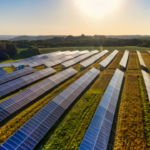




CEI Africa has committed €2 million in seed-stage financing to Dutch off-grid solar company Spark as it seeks to expand access to modular solar home systems across sub-Saharan Africa. The investment will support new financing mechanisms and initiatives aimed at helping local distributors reach more customers with affordable decentralised energy solutions. Spark operates as a B2B provider, supplying modular solar home systems and other off-grid products through local distributors rather than selling directly to households. Its existing Spark Invest model helps distributors finance equipment purchases and repay the financing from revenues collected from customers, helping address one of the key barriers to scaling off-grid energy: the upfront cost of equipment.
The new funding will also support two initiatives, Spark Catalyse and Spark Connect. Spark Catalyse will focus on developing financing tools designed to improve affordability and access, while Spark Connect will build a broader ecosystem around off-grid products, including services such as maintenance, after-sales support and complementary energy solutions.
Read Also: South Africa Registers 804MW of Renewable Projects as Grid Constraints Persist
Spark says its solutions have already reached about 2 million people across more than 23 African countries, including the Democratic Republic of Congo, Nigeria and Madagascar. CEI Africa, established by KfW on behalf of Germany’s BMZ and supported by Switzerland’s SDC, views decentralised energy solutions as critical to closing Africa’s electricity access gap, particularly in communities unlikely to be reached quickly through conventional grid expansion.
The investment therefore goes beyond financing solar equipment itself, targeting the distribution and financial infrastructure needed to scale off-grid energy. By strengthening local distributors’ ability to buy, deploy and finance solar systems, CEI Africa and Spark are betting that making the energy business easier to finance and distribute could be just as important as making the technology cheaper.


