

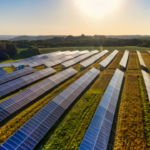

Ghana is set to add another utility-scale renewable energy project to its electricity network following plans by Sunon Asogli Power, a subsidiary of China’s Shenzhen Energy, to develop a 50 MW solar power plant in the Savannah Region. With an estimated investment of $34 million, the project will connect directly to Ghana’s 161 kV transmission network, strengthening the country’s renewable generation capacity while reinforcing confidence in West Africa’s clean energy market. Beyond its size, the project carries strategic significance. It represents Shenzhen Energy’s first overseas solar investment, marking the company’s entry into Africa’s renewable energy sector. For one of China’s major power producers, committing capital to Ghana suggests that selected African markets are becoming increasingly attractive destinations for long-term renewable infrastructure investment.
The project will be located in the Central Gonja District, an area with strong solar irradiation that is well suited for utility-scale photovoltaic generation. By connecting directly to the national transmission grid, the plant will contribute electricity to Ghana’s broader power system rather than serving as a standalone or isolated generation asset. For Ghana, the investment reinforces a trend that has been developing over the past decade. The country has established one of West Africa’s more mature electricity markets, supported by an existing transmission network, independent power producer (IPP) participation, and relatively well-developed regulatory institutions. Those characteristics reduce project risk and improve the bankability of new renewable developments.
The financing is also noteworthy. At $34 million, the project demonstrates that utility-scale solar no longer requires billion-dollar investments to make a meaningful contribution to national electricity systems. Falling equipment costs, improved engineering, and stronger project structures have lowered the capital required to deploy renewable energy at commercial scale. The investment also reflects a broader shift in Chinese overseas energy financing. While Chinese companies have historically invested heavily in hydropower, coal, and transmission infrastructure across Africa, there is growing interest in solar, wind, and battery storage as global energy markets transition toward lower-carbon technologies. Ghana’s project illustrates how that capital is increasingly being directed into renewable generation.
The project arrives at a time when many African countries are seeking to diversify their electricity mix while reducing exposure to volatile fuel prices and improving long-term energy security. Utility-scale solar offers one of the fastest and most cost-effective ways to expand generation capacity, particularly in countries with strong solar resources and existing transmission infrastructure. For investors, the announcement sends an encouraging signal. International developers are increasingly viewing African renewable energy projects through a commercial lens rather than primarily as development initiatives. When established energy companies commit their own balance sheets to long-term infrastructure projects, it reflects growing confidence in both the market and the regulatory environment.
Read Also: Egypt and UK Expand Renewable Energy Partnership to Support Grid Modernization
The broader implication extends beyond Ghana. Utility-scale solar projects are gradually moving from isolated investments to repeatable infrastructure opportunities across Africa. As financing structures improve and transmission networks expand, more countries are likely to attract similar investments from global energy companies looking to diversify their renewable portfolios. Ghana’s latest solar project is therefore about more than adding 50 MW of generation capacity. It demonstrates that international industrial capital continues to view well-structured African renewable energy markets as viable long-term investment destinations. That is an important signal for a continent seeking to accelerate its energy transition while attracting greater private-sector participation.


