Morocco continues to register across Africa’s off-grid renewable energy landscape, with new data from the International Renewable Energy Agency (IRENA) showing steady deployment across household, agricultural, and public-use applications.
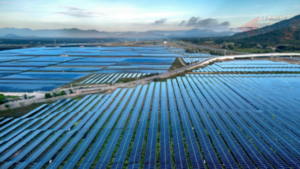
According to IRENA’s Off-Grid Renewable Energy Statistics 2025, Morocco’s off-grid solar capacity linked to solar lights and solar home systems stood at 10.218 megawatts (MW) in 2024.
This level has remained unchanged since 2019, following a step increase from 4.581 MW recorded between 2015 and 2018.
The data suggests consolidation rather than short-term experimentation. Capacity growth was achieved by 2019 and has since been maintained, indicating sustained use rather than pilot-driven expansion.
Higher-capacity solar home systems above 50 watts followed the same trajectory. Installed capacity reached 10.218 MW in 2024, up from 4.581 MW in the 2015–2018 period, with no further change after 2019.
Population coverage rose alongside this expansion. The number of people using solar home systems above 50 watts increased from 294,000 to 383,000, stabilising at that level from 2019 onward.
The plateau suggests that Morocco’s off-grid household solar market has moved into a maintenance phase rather than active scale-up.
Solar mini-grids continue to play a limited role. Morocco recorded just 0.008 MW of solar mini-grid capacity from 2019 through 2024. IRENA’s data shows no population connected to Tier 2 or higher mini-grids during this period, indicating that decentralised village-scale grids have not yet become a significant part of the country’s off-grid strategy.
Productive use applications account for a meaningful share of Morocco’s off-grid solar footprint.
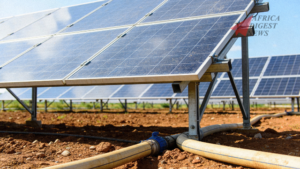
Total solar water pumping capacity increased from 0.823 MW in 2015 to 1.574 MW by 2022, where it remained through 2024. Within this:
- 0.607 MW was deployed for agricultural irrigation,
- 0.058 MW served public water supply systems.
These systems reflect targeted deployment where grid extension is either costly or impractical, particularly in rural and semi-arid regions.
Other off-grid solar photovoltaic installations recorded by IRENA under unspecified uses, showed higher capacity earlier in the decade. Installed capacity peaked at 16.927 MW in 2017 and 2018, before declining and stabilising at 11.198 MW from 2021 through 2024.
Read Also: Africa secures €15.5 billion commitment for renewable energy development
This contraction suggests a rationalisation of installations rather than broad expansion, with some systems likely retired or reclassified as grid-connected over time.
Clean cooking appears in the dataset at a limited scale. Solar cooker capacity remained constant at 0.093 MW between 2015 and 2024, serving an estimated 3,000 people annually.
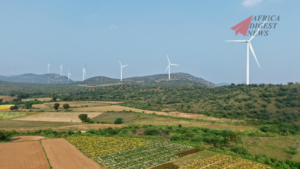
Beyond solar, Morocco consistently recorded 5.000 MW of off-grid wind capacity throughout the period, indicating early deployment that has neither expanded nor declined over the last decade.
Taken together, the figures place Morocco among the African countries with broad but stable off-grid renewable deployment.
The country appears across nearly every off-grid technology category tracked by IRENA, household electricity, agricultural pumping, public water services, clean cooking, and wind but with limited recent growth.
By Thuita Gatero, Managing Editor, Africa Digest News. He specializes in conversations around data centers, AI, cloud infrastructure, and energy.