



Written By: Faith Jemosop
Almost 92% of the world’s population now has access to electricity, according to the newly released Energy Progress Report 2025, a notable advancement compared to previous years. But despite the progress, over 666 million people still lack power, a stark reminder that the world is not on track to meet the 2030 target of universal access to affordable, reliable, sustainable, and modern energy.
This report, jointly prepared by key global energy and development agencies, serves as an annual checkpoint on the world’s journey toward Sustainable Development Goal 7 (SDG 7). While there are reasons for optimism, the data points to a persistent gap in electrification, clean cooking, and financing that must be addressed urgently.
Electrification vs Energy Inequality
Since 2015, an estimated 310 million people have gained access to electricity, a significant leap in global development. This expansion is largely credited to infrastructure improvements in Asia and parts of Latin America. However, the pace has slowed in recent years, with the report noting that current efforts fall short of the acceleration needed to achieve universal access by 2030.
Nowhere is this energy divide more evident than in Sub-Saharan Africa, which accounts for a staggering 85% of the global population without electricity. In many rural and conflict-affected regions, grid extension remains economically and logistically difficult, underscoring the urgent need for off-grid solutions and decentralized renewable energy systems.
Clean Cooking A Stubborn Challenge
Progress in clean cooking access continues to lag behind, with 2.1 billion people still relying on polluting fuels like wood, charcoal, and kerosene for daily cooking needs. These practices not only contribute to environmental degradation but also pose serious health risks, particularly for women and children.
The report highlights that advancement in clean cooking technologies is slower now than during the 2010s, raising concerns about declining political and financial prioritization of this critical issue. Achieving significant progress here will require targeted policies, public-private partnerships, and subsidies to encourage the adoption of cleaner alternatives such as LPG, biogas, and electric cooking solutions.
Renewable Energy Gains in Capacity, Gaps in Equity
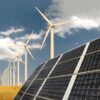
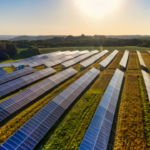
On a more positive note, developing countries have seen a steady rise in renewable energy adoption. As of 2025, installed renewables capacity per capita has grown to 341 watts, more than doubling from 155 watts in 2015. This growth is largely driven by solar PV and wind installations, spurred by falling technology costs and supportive policy frameworks.
Yet, disparities remain. Many low-income countries, particularly in Africa, are still unable to harness the full benefits of renewables due to financing barriers, regulatory uncertainty, and lack of technical capacity. The report urges that more effort be directed toward building local capacity and de-risking investments to unlock renewables at scale.
In 2023, international financial flows to developing countries for clean energy projects totaled USD 21.6 billion. While this figure represents a modest increase, it is far below the estimated USD 660 billion required annually to meet SDG 7 in full.
The report emphasizes that financial bottlenecks are the primary constraint slowing progress, particularly in the least-developed countries. It calls for bold reforms in multilateral lending institutions, a scaling-up of concessional financing, and a higher risk appetite among donors and private investors alike.
A Call for Urgent, Coordinated Action
The Energy Progress Report 2025 does more than present data, it issues a call to action. Global stakeholders must strengthen international cooperation and adopt a more inclusive approach to energy planning. This includes:
- Expanding concessional finance to make projects bankable in high-risk regions.
- Supporting policy reforms that create enabling environments for investment.
- Investing in innovation and local capacity-building to tailor solutions to specific regional challenges.
Also read: Electric vehicles Prices in Kenya
Without immediate and coordinated action, the ambition of universal energy access by 2030 will remain out of reach. The report makes it clear that while technology and capital exist, political will and financial commitment are the missing ingredients.


