


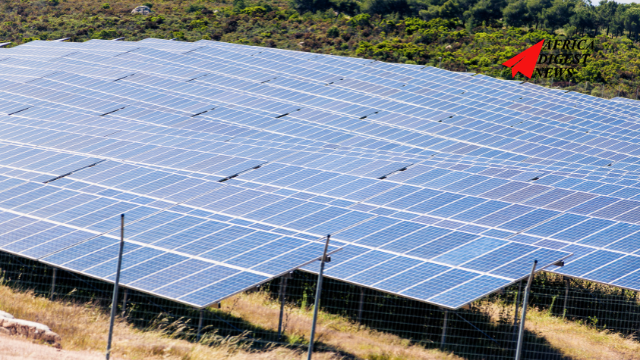
Kumba Iron Ore has signed an embedded solar energy offtake agreement for its Sishen mine, adding another major mining company to the growing list of industrial users securing private renewable electricity. While the company maintained its full-year production guidance, the agreement highlights a broader shift in how South Africa’s mining sector is managing energy risk. Rather than waiting for grid reliability to improve, miners are increasingly investing in their own power solutions.
The announcement came as Kumba reaffirmed that logistics remain its biggest operational challenge. The company pointed to continued rail constraints on the Transnet network as the primary factor affecting exports, while its production outlook remained unchanged. Against that backdrop, the embedded solar agreement is less about sustainability targets and more about strengthening operational resilience. Electricity has become one of the mining industry’s most significant operating costs. Eskom tariffs have increased by more than 600% since 2008, while periodic supply disruptions have forced companies to rethink their long-term energy strategies. For energy-intensive operations like Sishen, where electricity powers crushing, processing, pumping, and other continuous industrial activities, interruptions can translate directly into lower production and higher operating costs. Embedded solar changes that equation.
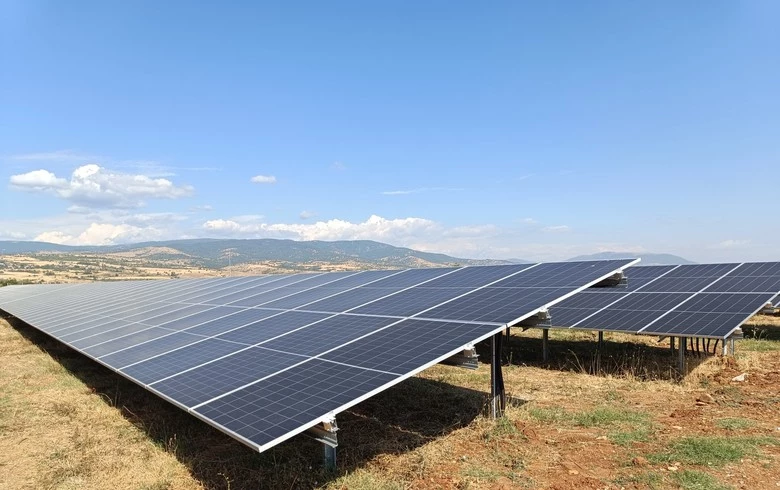
Unlike conventional electricity procurement, where power is purchased entirely from the grid, embedded generation allows a mine to contract directly for renewable electricity produced close to the point of consumption. Depending on the project structure, the electricity can be supplied behind the meter or through dedicated private arrangements that reduce reliance on Eskom while improving long-term cost certainty.
The commercial appeal is straightforward. Renewable power purchase agreements typically provide fixed or predictable electricity pricing over 15 to 20 years, reducing exposure to future tariff increases while lowering daytime electricity costs. For large industrial users, that predictability can be as valuable as the electricity itself, particularly when planning capital investments and production schedules.
Kumba’s agreement also reflects a wider trend across South Africa’s mining industry. Major producers including Anglo American, Gold Fields, Sibanye-Stillwater, Exxaro, and African Rainbow Minerals have all announced significant investments in self-generation, wheeling arrangements, or renewable energy procurement. Together, these projects represent several gigawatts of planned renewable capacity aimed at improving energy security and reducing operating costs.
Read Also: Is Behind-the-Meter Solar Already Cheaper Than Grid Power for South African Mines?
The shift is being driven by economics rather than environmental commitments alone. Mining companies consume electricity around the clock, making energy reliability essential to maintaining production. While embedded solar cannot replace grid power entirely, it can significantly reduce daytime electricity purchases, lower operating costs, and improve resilience when combined with grid supply, battery storage, or other backup systems. This hybrid approach is rapidly becoming the preferred model. Instead of pursuing complete energy independence, many mining companies are building diversified energy portfolios that combine utility supply with privately procured renewable power. The objective is not to eliminate Eskom from the equation but to reduce exposure to its risks.
For Kumba, the embedded solar agreement fits squarely within that strategy. Although logistics remain the company’s largest operational constraint, securing a long-term renewable electricity supply removes one area of uncertainty from the business. In an industry where operational stability directly affects profitability, managing energy risk has become as important as managing commodity prices or transport capacity. The broader implication is clear. Renewable energy is increasingly being treated as core infrastructure that supports competitiveness and operational resilience.