

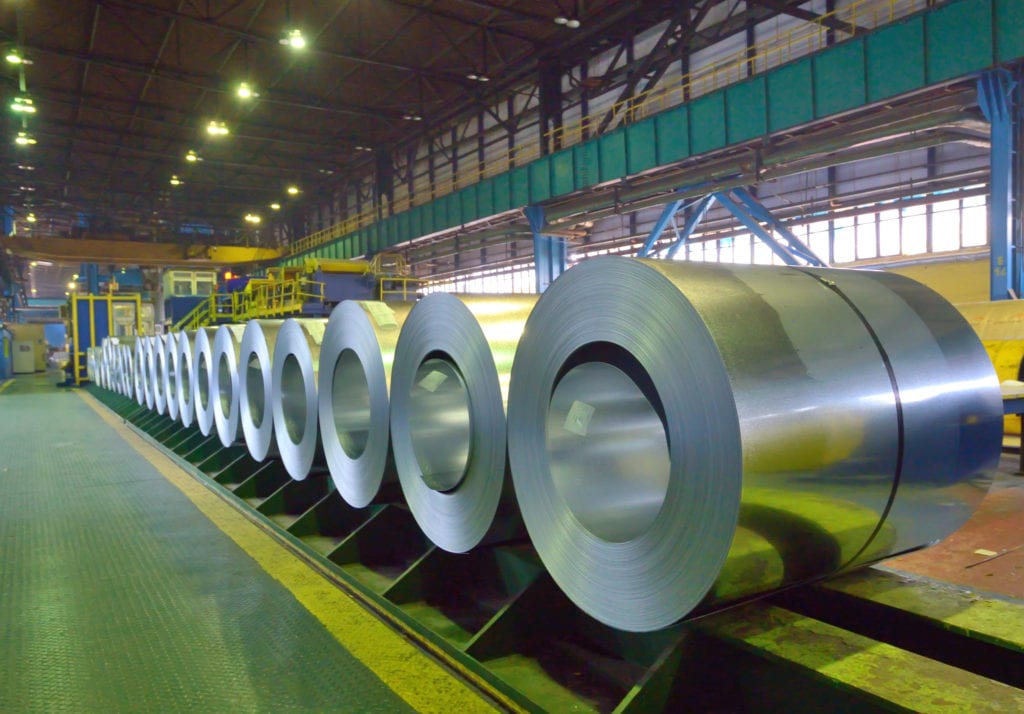
The global push to cut emissions from steelmaking is creating a new industrial question for Africa: can the continent use its iron ore, renewable energy and emerging green hydrogen capacity to move beyond exporting raw materials? The opportunity is becoming more tangible as buyers begin looking for lower-emission steel. Google, for example, has agreed to purchase environmental-attribute certificates linked to up to 91,000 tonnes of near-zero-emission steel from Swedish producer Stegra in its first year. At the same time, the European Union’s Carbon Border Adjustment Mechanism is making the carbon intensity of imported industrial products increasingly important for producers seeking access to the European market.
Africa already has one of the critical ingredients: iron ore. The continent remains a major net exporter, but much of that resource leaves Africa before significant downstream processing takes place. The shift toward green steel could change the economics of that model. More than 80% of Africa’s ironmaking capacity uses direct reduced iron technology, creating a potential pathway to replace natural gas with green hydrogen as hydrogen production becomes more competitive. In countries with strong solar and wind resources, renewable electricity could therefore support hydrogen-based DRI production and eventually the conversion of that material into higher-value steel.
But having the resources does not automatically create a competitive green-steel industry. The production chain requires dedicated renewable generation, reliable electricity, electrolysers, water, storage and DRI or hot-briquetted iron facilities, followed by steelmaking capacity and the infrastructure needed to move products to international markets. Ports, railways, industrial zones and long-term offtake agreements become part of the equation. So does certification: buyers need to be able to verify the emissions profile of the steel they are purchasing. This makes green steel as much an infrastructure and industrial-finance challenge as a technology challenge.
The gap between potential and delivery is already visible in Africa’s green-hydrogen pipeline. Low-emissions hydrogen output remains small, at roughly 6,000 tonnes, while only one of 31 identified projects had reached a final investment decision in the assessment cited by Africa Sustainability Matters. That matters because steel projects require large, long-term capital commitments, and investors need confidence that renewable power, hydrogen, water, transport infrastructure and industrial facilities will all arrive together. A project cannot produce competitive green steel if one part of that system remains unavailable or unreliable.
Read Also: Why Egypt Is Linking Its Wind Boom to a Turbine Manufacturing Industry
That is what makes green steel a broader industrial opportunity for Africa rather than simply another renewable-energy application. The strategic question is whether the continent uses its resource and energy advantages to export more processed material, develop local steelmaking ecosystems and build capabilities around engineering, operations and manufacturing, or continues to capture most of the value before the ore leaves its shores. Green steel will not eliminate the challenges of African industrialisation, but it creates a market in which renewable energy, minerals and hydrogen can be combined into a higher-value product. The countries that can connect those pieces at commercial scale will determine how much of that value stays within Africa.