



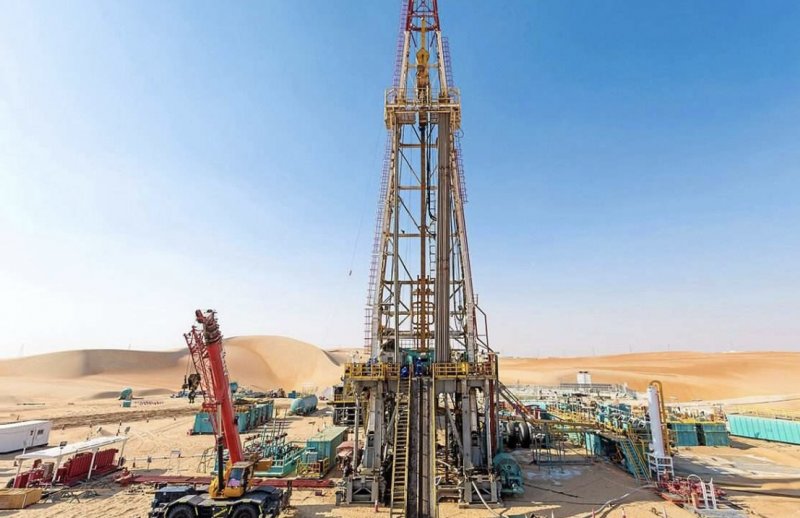
Tanzania has announced an estimated 223 billion cubic feet (Bcf) natural gas discovery at the Kasa-1X ST2 well in the Mnazi Bay Block, Mtwara Region—its first new gas find in more than a decade. The discovery is modest against the country’s 57.54 trillion cubic feet resource base, but its near-term value lies in domestic power supply, industrial fuel and investor confidence. Energy Minister Juma Zuberi Homera announced the find on October 27, 2026. The well was drilled by state-owned Tanzania Petroleum Development Corporation (TPDC) in partnership with France’s Maurel & Prom, which operates the Mnazi Bay licence.
The Kasa-1X ST2 discovery is estimated by the government at 223 Bcf, or about 6.3 billion cubic metres. Maurel & Prom’s own estimate is slightly lower: about 200 Bcf gross, with 120 Bcf attributable to its 60% interest. The discrepancy matters because neither figure has been presented as a certified recoverable reserve. The economic impact will depend on flow rates, reservoir performance, infrastructure capacity and the share that can ultimately be produced and sold.
| Metric | Detail |
|---|---|
| Discovery volume | 223 Bcf government estimate; 200 Bcf gross under Maurel & Prom’s estimate |
| Location | Mnazi Bay Block, Mtwara Region, southern Tanzania |
| Well | Kasa-1X ST2 |
| Partners | TPDC and Maurel & Prom |
| Expected production | About 30 MMcf/d for at least 10 years, per the minister; up to 50 MMcf/d gross under Maurel & Prom’s outlook |
| First production | Possible from November 2026 |
| Tanzania’s existing gas resources | 57.54 Tcf before the discovery |
Why it matters for Tanzania’s grid
Natural gas supplied nearly 80% of Tanzania’s electricity generation in 2024, making the fuel central to grid reliability, industrial expansion and household energy access. More than 80% of gas produced at Mnazi Bay already feeds Tanzania Electric Supply Company (TANESCO) power plants in Mtwara and Dar es Salaam. The new well is therefore not primarily an export story; it is a domestic security story.
Tanzania’s generation mix has also been exposed to hydropower variability. In March 2024, gas accounted for 56.1% of installed electricity generation of 2,138 MW, hydro 39.1%, oil 4.3% and biomass 0.5%. A new, quickly tie-in-able gas source can reduce the risk of drought-driven power shortfalls. Unlike deepwater discoveries that can take years to monetise, Kasa-1X ST2 is expected to begin production as early as November 2026. The government expects roughly 30 million cubic feet per day for at least 10 years, while operator Maurel & Prom has indicated potential gross output of up to 50 MMcf/d.
That timing is important. Tanzania has been drilling additional wells at Mnazi Bay—MB-5 and MS-2—which have lifted field production to about 130 MMcf/d. The new discovery adds incremental supply rather than requiring an entirely new processing and evacuation system.
TPDC’s stake in the Mnazi Bay Block was raised from 20% to 40% in 2024, increasing the state’s direct exposure to future production and profit gas. Maurel & Prom holds a 60% operating interest. For African policymakers, the deal illustrates a growing model: retain a larger state interest in producing assets while using an experienced international operator to fund drilling, technical work and early production. The government expects revenue through profit gas, TPDC earnings and taxes.
Small find, bigger investment signal
At 223 Bcf, the discovery equals just 0.223 Tcf—less than 0.4% of Tanzania’s existing 57.54 Tcf resource base. It will not transform Tanzania’s reserves on its own.
But its strategic value is larger than its size:
- It ends a decade-long exploration drought and validates continued drilling in a proven gas province.
- It supports domestic power, industry, fertiliser feedstock and compressed natural gas for transport.
- It strengthens the investment case for Mnazi Bay infrastructure and future exploration campaigns.
- It gives Dar es Salaam a near-term supply response while it negotiates much larger export projects.
Tanzania’s bigger gas ambition remains the proposed $42 billion LNG project in Lindi Region, led by Equinor and Shell with ExxonMobil, Pavilion Energy, Medco Energi and TPDC. The project is designed to monetise offshore resources estimated at 47.13 Tcf, although commercial and fiscal terms remain under negotiation.
Read Also: Botswana’s $504 Million AfDB Loan Links Renewable Energy Auction to Universal Electricity Access
The Mnazi Bay discovery does not directly add LNG export volumes because its gas is intended for the domestic market. However, successful fast-track development at Kasa-1X could improve confidence in Tanzania’s ability to move projects from discovery to production—an important signal for investors weighing the country’s larger, capital-intensive LNG plans.
What to watch next
- First gas timing: Whether production starts in November 2026 as projected.
- Sustained flow rates: Whether output reaches 30 MMcf/d or the operator’s 50 MMcf/d gross potential.
- Reserve classification: Whether government and operator estimates are converted into audited recoverable reserves.
- Domestic offtake: How additional volumes are allocated across power plants, industry and vehicle fuel.
- LNG negotiations: Progress on fiscal terms, host-government agreements and parliamentary legislation for the proposed export project.
Tanzania’s latest discovery is something arguably more immediate: new domestic gas supply, a renewed exploration signal, and a test of whether East Africa’s second-largest gas holder can convert geology into reliable, affordable energy.


