


Kenya’s push toward universal electricity access may increasingly depend on building power systems that do not wait for the national grid to arrive. At the Power Africa Conference 2026, Renewable Energy Assistant Director George Nyongayo called for more investment in green mini-grids, particularly in remote areas that remain outside the grid. The proposition is straightforward: where extending a large centralised network is slow or expensive, a smaller local electricity system can bring power directly to the communities that need it.
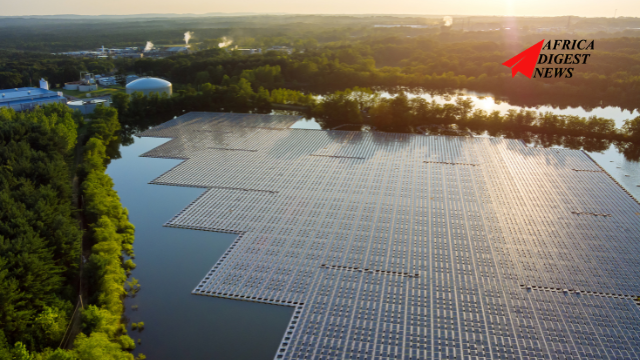
The technology already fits Kenya’s energy system. Mini-grids can combine solar generation, batteries and local distribution networks to supply communities without requiring a connection to the national transmission system. That makes them particularly relevant in remote areas where long transmission and distribution lines would have to serve relatively dispersed populations. Instead of extending the national grid kilometres at a time, investment can create an independent electricity system around the actual concentration of demand.
But the economic case is bigger than household connections. Reliable local electricity can support businesses, water systems, health facilities, refrigeration, telecommunications and productive equipment. Nyongayo specifically highlighted applications such as tele-health, illustrating the difference between treating electricity as a household-access statistic and treating it as infrastructure for economic activity. Once electricity enables businesses and services to operate, the mini-grid becomes part of the local economy rather than simply another way to provide lighting.
Read Also: Zimbabwe Just Reversed 30 Years of Power-Sector Reform
Kenya also has an increasingly relevant regulatory and investment environment for this model. Renewables supplied 78.79% of electricity delivered to the national grid between July and December 2025, according to EPRA, while renewables accounted for about 80.6% of installed generation capacity. EPRA has also approved three-year tariffs for Renewvia Energy Kenya mini-grids in Turkana, providing a regulatory framework for private operators. At the same time, Kenya is seeking more than Sh2.4 trillion in public and private energy investment by 2030, including investment in generation and battery storage.
The challenge is therefore moving from recognising mini-grids as an access technology to treating them as investable infrastructure. Developers need tariffs that support operations, customers who can pay, productive demand that grows over time and financing structures that match the economics of small distributed systems. If those pieces come together, Kenya can pursue two electricity strategies simultaneously: expand the national grid where it makes economic sense while building local renewable systems where it does not. Universal access may ultimately be less about making one grid reach every Kenyan and more about building several kinds of electricity systems that collectively do.