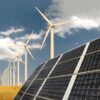



Nigeria’s solar market grew by about 141% in 2025, adding roughly 803 MW of new capacity and making the country Africa’s second-largest solar market. But the number tells only part of the story. Much of the growth is not coming from large utility-scale projects. It is being driven by households and businesses looking for an alternative to an unreliable and increasingly expensive electricity system.
Nigeria’s grid has struggled to provide reliable power, leaving more than 85 million people without reliable electricity access and pushing businesses and households toward self-generation. For companies already spending heavily on diesel and petrol generators, solar and battery systems are increasingly becoming an economic decision rather than simply an environmental one. High fuel costs, exchange-rate volatility and rising grid tariffs have improved the case for generating electricity closer to where it is consumed.
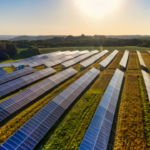
The structure of Nigeria’s solar market shows just how closely the boom is tied to this power problem. By the end of 2025, the country had about 1.19 GW of cumulative solar capacity, with roughly 1.15 GW, or about 96%, coming from off-grid and distributed systems. Solar home systems, private mini-grids and commercial and industrial rooftop or behind-the-meter installations account for most of the market, allowing users to add power without waiting for transmission and distribution networks to improve.
Read Also: Why Morocco Has Become GAC’s Gateway to a New-Energy Africa
Policy and finance have also helped turn that demand into deployment. The Electricity Act 2023 opened more space for states and private players to participate in electricity generation and distribution, while the 2023 Mini-Grid Regulations provided clearer rules around licensing, tariffs and interconnection. The World Bank-backed DARES programme has added development finance for solar home systems and mini-grids, while falling equipment costs and financing models such as leases, pay-as-you-go systems and solar PPAs have reduced the upfront cost of switching.
That makes Nigeria’s 141% solar growth less a story about solar suddenly becoming fashionable and more a story about electricity economics changing. Solar is filling a gap created by unreliable supply while helping businesses reduce exposure to diesel, fuel-price volatility and rising tariffs. The next phase of Nigeria’s market will therefore depend not only on how much solar is installed, but on whether distributed generation, batteries, mini-grids and commercial solar can develop into a larger electricity system alongside—and increasingly around—the national grid.