
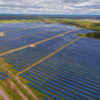






Solar power can help African countries reduce their dependence on hydropower during droughts by supplying electricity when sunlight is available and allowing reservoir water to be conserved for later use. The approach is particularly relevant to countries such as Zambia and Zimbabwe, where the Kariba Dam plays a major role in electricity generation. The International Energy Agency (IEA) estimated that hydropower accounted for about 17% of Africa’s electricity generation, with its share exceeding 80% in countries including the Democratic Republic of Congo, Ethiopia, Malawi, Mozambique, Uganda and Zambia. That dependence makes electricity supply vulnerable when rainfall and river inflows fall.
The mechanism is straightforward. Solar photovoltaic panels generate electricity during daylight hours, when hydropower plants might otherwise need to release water to meet demand. If solar generation supplies part of that demand, operators can reduce hydropower output and retain more water in the reservoir. The conserved water can then be used after sunset, during periods of low solar production or when electricity demand rises.
This makes solar and hydropower complementary: solar provides energy when the sun is available, while reservoir-based hydropower can offer dispatchable generation when the system needs it. The actual water savings depend on whether operators adjust hydroelectric output in response to solar generation, as well as on electricity demand, reservoir operating rules and other water requirements.
The potential is especially relevant in Southern Africa, where drought has exposed the risks of relying heavily on hydropower. During the 2024 drought, low water levels at Kariba sharply constrained generation and contributed to electricity shortages in Zambia and Zimbabwe. More recently, improved rainfall helped reservoir storage recover, but the experience demonstrated how quickly hydrological conditions can affect electricity supply. A study published in Nature Climate Change found that combining hydropower with solar and wind, alongside regional electricity interconnections, could help compensate for climate-related reductions in usable hydropower capacity. The findings support diversification rather than replacing hydropower entirely.
One option is to install solar panels on land near existing hydropower stations. Another is floating solar, in which photovoltaic panels are installed on platforms over reservoirs. A 2021 study published in Renewable Energy assessed floating solar potential across 146 of Africa’s largest hydropower reservoirs. It estimated a continent-wide technical potential of approximately 2,922 GWp. The researchers also estimated that covering 1% of the assessed reservoir surfaces could add 171 GWh of electricity annually and save up to 743 million cubic metres of water per year through reduced evaporation. These are modelled estimates across the study’s reservoir portfolio, not measured savings already achieved at Kariba or a guarantee that every reservoir could deliver the same results.
Read Also: Zambia’s 56 MW Solar Project Moves Into Construction After Securing $52 Million
Kariba itself is being considered for this approach. Swedfund reported in September 2026 that it was financing environmental and social studies to advance a planned large-scale floating solar plant on the lake, developed by the Zambezi River Authority. The project remains at the assessment stage; the studies are not evidence that construction has begun or that electricity is already being generated. If developed, a floating solar facility could add generation capacity close to existing hydropower infrastructure and potentially help conserve water during daylight hours. Its contribution would depend on the eventual plant size, environmental findings, financing, grid connections and how Zambia and Zimbabwe coordinate solar output with water allocations and hydropower operations.
Solar cannot eliminate the risks associated with drought, and its output falls after sunset and varies with cloud cover. Batteries can shift some daytime solar electricity into evening hours, while flexible hydropower, geothermal generation, other dispatchable plants and cross-border electricity trading can help meet demand when solar output is insufficient. Grid operators must also manage transmission capacity and the timing of generation to ensure that additional solar electricity actually displaces water-consuming hydropower rather than simply adding to total supply.
The opportunity is therefore not just to install more panels, but to coordinate generation, storage, reservoir management and electricity markets. For African countries exposed to drought, combining solar with hydropower can make better use of existing infrastructure and water resources, while a diversified electricity mix reduces the risk that one poor rainy season will become a national power crisis.

