





A country can experience an electricity shortage even when a neighbouring country has surplus generation. Cross-border electricity trading is designed to bridge that gap by allowing utilities to buy power from other countries rather than relying entirely on domestic power plants. The African Development Bank’s 2026 Annual Development Effectiveness Review identifies five regional power pools as the foundation of the continent’s planned electricity market: West Africa, Southern Africa, Eastern Africa, Central Africa and North Africa.
These institutions coordinate grid development, power trading and regional planning, but they do not constitute one fully integrated continental grid. Electricity can only be exchanged where transmission links, operating arrangements and commercial agreements allow it.
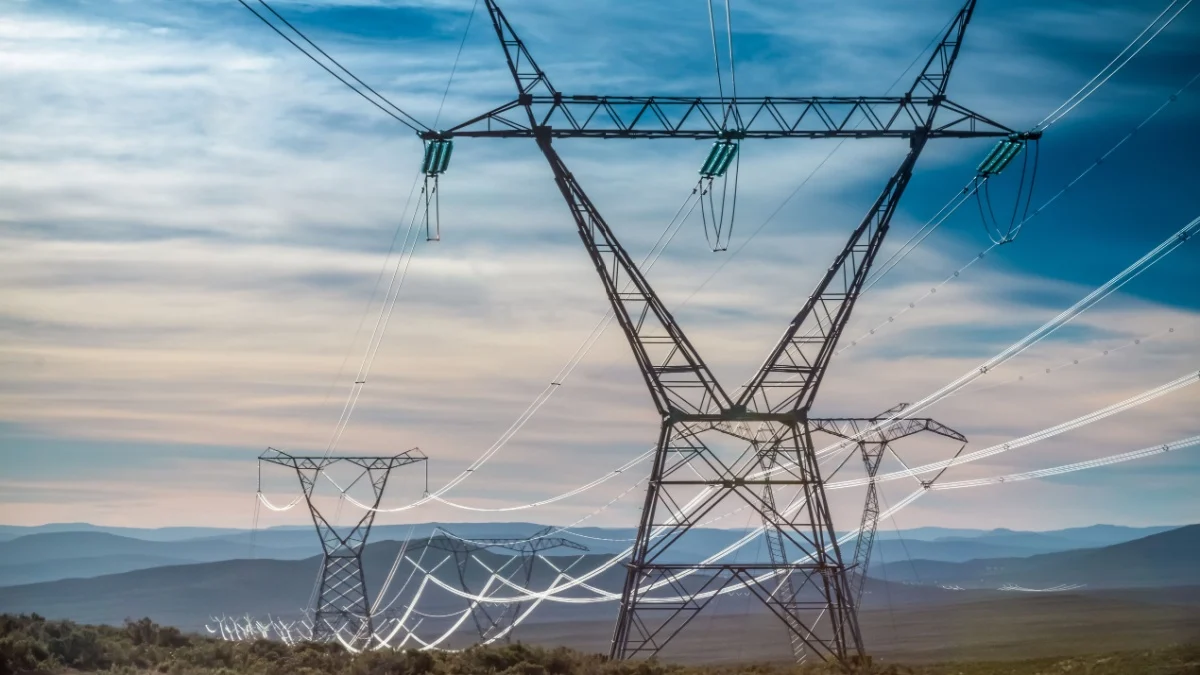
The first requirement is a physical connection between electricity networks. High-voltage transmission lines link national grids, allowing electricity generated in one country to flow into another through interconnected systems. The West African Power Pool (WAPP), for example, has helped connect 15 countries through more than 4,000 kilometres of high-voltage transmission lines. According to the World Bank’s May 2026 results update, around 8% of the region’s electricity was being traded across borders.
The network has enabled countries with available generation, including Côte d’Ivoire and Guinea, to supply neighbours that would otherwise depend more heavily on expensive domestic generation. But the existence of a transmission line does not guarantee unlimited trade: available transfer capacity, maintenance outages, congestion and the condition of national grids all determine how much electricity can move at a given time.
The second requirement is a commercial arrangement that determines who buys the electricity, how much is supplied, when delivery occurs and what the buyer pays. In Southern Africa, the Southern African Power Pool (SAPP) operates several trading mechanisms. Bilateral contracts allow utilities to agree on volumes and prices over longer periods, with transmission capacity secured in advance. Firm contracts generally carry penalties for non-delivery and offer greater supply certainty, while non-firm contracts can be interrupted.
The pool also operates forward physical markets for weekly and monthly delivery, a day-ahead market for electricity scheduled for the following day, and an intraday market that allows participants to trade closer to delivery. These arrangements help utilities balance longer-term supply commitments with changing demand and short-term shortages.
Regional trading is also expanding in Eastern Africa. The African Development Bank’s 2026 review reports that cross-border electricity trade in the Eastern Africa region increased from 280 gigawatt-hours in 2010 to approximately 3,217 GWh in 2023, an increase of more than elevenfold. Over a similar period, the region’s transmission network expanded from 303 kilometres in 2010 to 2,753 kilometres in 2024.
Kenya’s imports from Ethiopia illustrate how these connections can change a country’s supply mix: in late 2024, electricity from Ethiopia accounted for more than 13.4% of Kenya’s electricity supply, according to the review. Such imports can reduce the need to run more expensive thermal plants, provided the supplying country has available electricity and the interconnector can carry it.
However, regional power trading has limits that agreements alone cannot overcome. A country may have a surplus on paper but lack enough transmission capacity to export it. A buyer may need electricity during a period when its neighbours are also experiencing drought, peak demand or plant outages. Financial problems can also disrupt trade: if a national utility cannot pay its suppliers on time, it can undermine confidence in contracts and discourage further investment. Different national regulations, market rules, technical standards and system-operating procedures add further complexity.
Read Also: Zambia’s 56 MW Solar Project Moves Into Construction After Securing $52 Million
The Eastern Africa Power Pool has identified the need for clear rules on transmission access, wheeling charges, congestion, network losses and balancing electricity exchanges. In West Africa, the World Bank has highlighted the importance of standard contracts, regional grid codes, operator agreements and mechanisms that support timely payments. Building the infrastructure is therefore only part of creating a functioning market.
The economic case for integration is substantial, but its benefits depend on execution. The African Development Bank has estimated that increased electricity trading could generate benefits of up to US$32 billion in West Africa and approximately US$18.6 billion in Eastern Africa between 2020 and 2030. These are estimated potential benefits, not realised savings or guaranteed revenues. Achieving them requires more than building interconnectors: countries need financially viable utilities, enforceable contracts, reliable payment systems and coordinated investment in generation and transmission.
Regional trade cannot eliminate a continent-wide shortage of electricity, nor can it guarantee supply during a drought affecting several interconnected countries. It can, however, allow available electricity to be used more efficiently, reduce reliance on expensive emergency generation and delay some investments that would otherwise be needed to meet national demand. The long-term objective is not simply to move electricity across borders, but to make regional supply systems more reliable and less costly than isolated national systems.


